Sunday, August 13, 2023

Melugeons Wikipedia

MELUNGEONS

COPIED FROM FROM WIKIPEDIA

Written by armchair authors who copy and paste cherry picked data to suit their theories.

For Melungeon Disinformation  - See Wikipedia

"Melungeans, Melungins, Melungeons are a group of people from Appalachia who predominantly descend from Northern or Central European women and sub-Saharan African men."

------------------------------------------------------------------------------------
This is from the HALF TESTED Melungeons by four authors whose aim was to author, along with Jill Lackey,  books, documentaries etc., on the AFRICAN HERITAGE OF THE MELUNGEONS  when the DNA PROJECT was barely a year old. I, Joanne Pezzullo was co-founder of this project from the beginning, with Jack Goins, Penny Feruguson and Janet Crain.  I was the genealogist of the project, all surnames were researched by me. I quit in 2008-2009 in disgust as the project became 'shady'.  My replacement, Kathy James also quit in disgust. See my review where I show from 2005 to 2012 when the paper was published that barely HALF the surnames listed, according to them, belonged in the project WERE NOT TESTED  and not part of the data release.


In 2011, Estes, Goins, Ferguson, and Crain founded the Melungeon DNA Project. They reported that the Melungeon lines had likely originated in the unions of black and white indentured servants living in Virginia in the mid-17th century before slavery became widespread in the United States.[10] They concluded that as laws to prevent the mixing of races were put into place, those family groups intermarried with one another creating an endogamous group.


This is the worse part of the Wikipedia article.  Much of Wikipedia is taken from the shoddy DNA study in 2012. 

Jack Goins and Roberta Estes both admitted what was printed in the paper was errouneous - that in fact the results were Half European and Half African.  You cannot take a European man married to a'white indenture servant  and have an African baby. 

Jack Goins blog
  (Jack criticizing Joanne 😏  Just threee years after he reported their ancestors were African men and European women:

"Those results plainly show an almost even mixture of European and 
African males and all the maternal test were European".

https://tinyurl.com/yckyt8kn


Roberta Estes on the 2012 DNA Study

"The AP picked up on the paper and set about to write their own article.  They did a pretty good job, all things considered, except for a typo or two (death years pertaining to photos should have been in the 1900s, not 1800s) and one slight error (the Melungeon male lines who tested were both African and European)"

https://tinyurl.com/yhf4wkb2                   

They promised an update in 2012,  eleven years ago, I have not seen one, have you?

----------------------------------------------------------------------------

"Initially, a generalized pejorative racial slur, Melungeon became associated with 40 families living in East Tennessee and Southwest Virginia.[1][2][3] Neighboring Melungeon settlements may have included the Cumberland Gap area of central Appalachia, which includes portions of eastern Kentucky."

This paragraph is absolutely off the charts when it comes to even the slightest bit of research. 

It was not intitially a racial slur, it was given to a group of 50 mixed families living on the Pee Dee River in 1754 most of whom came from Charles City County as Indian traders with mixed families. These families, because of the 'laws in South Carolina left the state, settling in SW Virginia, East Tennessee, Kentucky, while some went south into Alabama, Arkansas, Mississippi etc. 
---------------------

"Unfounded theories of Melungeon origins that have been disproven include them having Portuguese, Native American, Turkish, or Romani ancestry. They likely made these claims to account for their dark complexion while hiding their African heritage to remain free."

DISPROVEN BY A SHODDY 2012 DNA REPORT the authors have admitted was NOT CORRECT.  I have never seen any document, article, DNA etc., that has disproven Portuguese or Native American ancestry.  In fact it is the opposite.  


Fifty men who descend from one Gibson ancestor of Charles City County who are proven descendants of an Indian woman in a court document carry the Atlantic Modal Haplotype that is found in 90% of the men in some parts of Portugal.  Very little is written on the shipload of Portuguese that came with DeSoto in 1540, or the "Lost Colony" of Lucas DeAyllon in 1527,  or the court cases that decided with the Melungeons they were in fact descended from Portuguese ancestors. 


http://www.khazaria.com/genetics/portuguese.html

----------------------------------------------------------------------------------------  

"The earliest historical record of the term Melungeon dates to 1813. In the minutes of the Stoney Creek Baptist Church in Scott County, Virginia, a woman stated another parishioner made the accusation that "she harbored them Melungins."

The search for the original document held by the Boatwater family in the 1960s was hunted down by Jack Goins, ask him if it mentioned the Melungins or the McLungs

Charles and Hugh McClung owned 57,000 acres in Russell/Scott County they were buying up all the land because for the COAL.  They were land grabbers 1812-1813 and the people at that church knew it. 

---------------------------------------------------------------------

"On November 10, 1935, The Nevada State Journal wrote: "Melungeons are a distinct race of people living in the mountains of eastern Tennessee. They are about the color of mulattoes but have straight hair."[8][better source needed]

More opinions 

Solomon's father Spencer Bolton was born on the Pee Dee River in  1735 thus one of the mixed families found there in 1754. His daughter was proved to be of Portuguese descent in Hamilton County Court - upheld in the Supreme Court. He, along with the GOINS PERKINS SHOEMAKE etc remain the only identified Melungeons in a court case. 

Q. What was the color of Solomon Bolton? Was it not that of a mulatto or half breed negro?
A. He was dark skinned.
Q. Was he not darker than a dark skinned white man, and was not the color different to that of a dark skinned white man and did he not look like a mulatto?
A. He was darker than a dark skinned white man, but I never thought his color looked like a mulatto or negro, but thought it looked like Spaniard. I have saw one or two Spaniards in my life time.

Q. State whether or not you know of any of Bolton's family-- his father or other in the state of North Carolina or other place
A. I was in So Carolina once and saw his father. I knew most of his family. I was on business in So Carolina. His father, or a man claiming to be his father came to me to inquire after his son Solomon Bolton whom he said was living in this County
Q. State whether or not the father of Solomon Bolton was regarded and treated as a citizen of South Carolina, or as a colored man? You will also state his church relations-to what church he belonged and how he was received by society, so far as you were able to determine.
A. They told me there that he was a very respectable citizen there. I asked if he was not a colored man and they told me he was not, but was a Portagese. The told me that he was a member of Baptist Church there in good standing and was received in good society. I saw nothing to the contrary.

Goodspeeds HISTORY OF TENNESSEE - 1886 

"A settlement was also made at an early date at Mulberry Gap, where a little village sprang up. Newmans' Ridge, which runs through the county to the north of Sneedville, and parallel with Clinch river, is said to have taken its name from one of the first settlers upon it. It has since been occupied mainly by a people presenting a peculiar admixture of white and Indian blood."

There are HUNDREDS of articles on who, where etc were the Melungeons, what color were they. Read who their neighbors, attorneys, tax men etc had to say, not some 1935 Nevada newspaper. 

----------------------------------


"Racial laws and court cases
Melungeon ancestors were considered by appearance to be mixed race. During the 18th and the early 19th centuries, census enumerators classified them as "mulatto," "other free," or as "free persons of color." Sometimes they were listed as "white" or sometimes as "black" or "negro," but almost never as "Indian".


'Never as "Indian" 

They snuck that 'almost' in there 😃

"An examination of the annual census records from 1860 to 1890 shows the beginnings of the enumeration of Native Americans in the census. Article I, section 2, of the Constitution requires a census to be taken every 10 years so that seats in the House of Representatives can be apportioned among the states. Section 2 excludes "Indians not taxed"—those Indians living on reservations or those roaming in unsettled areas of the country.

The first federal decennial census that clearly identifies any Native Americans is the 1860 census .1 The instructions to the 1860 census enumerators defined who was to be counted and who was not:

Indians not taxed are not to be enumerated. The families of Indians who have renounced tribal rule, and who under state or territory laws exercise the rights of citizens, are to be enumerated.

 In 1890, the Census Bureau made an effort to count all Indians, both taxed and untaxed, and the results were published in extensive monographs focused on the population 

Report on Indians Taxed and Indians Not Taxed in the United States (except. Alaska) at the Eleventh Census: 1890.
Washington, DC: US Census Printing Office


In a number of states small groups of people, preferring the freedom of the woods or the seashore to the confinement of regular labor in civilization, have become in some degree distinct from their neighbors, perpetuating their qualities and absorbing into their number those of like disposition, without preserving very clear racial lines. Such are the remnants called Indians in some states where a pure-blooded Indian can hardly longer be found. In Tennessee such a group, popularly known as Melungeans, in addition to those still known as Cherokee.

This is a GOVERNMENT DOCUMENT recognizing the Melungeons as Indians, Cherokee Indians.  They were descendants of the Collins, the Gibsons, the Mullins, Goins etc.    So whatever they were 'marked as' 1790-1890 was simply our Government's paper genocide. 

On one census in the 1900s the entire Pamunkey Tribe in Virginia were marked as 'B' or 'M'  they sued the census bureau and won.  

1900 Census 


INSTRUCTIONS FOR FILLING THIS SCHEDULE


This modified form of Schedule No 1 is to be used in making the enumertion of Indians, both those on the reservations and those living in family groups outside of reservations.

Detached Indians living either in white or negro families outside of reservations should be enumerted on the general populaton schedule (Form 7-224) as members of the families in which they are found: but detached whites or negroes living in Indian families should be enumerated on this schedule as members of the Indian families in which they are found. In other words, every family composed mainly of Indians should be reported entirely on this schedule and every family composed mainly of person not Indian should be reported entirely on the general population schedule.

http://www.historical-melungeons.com/mag_indians.html

Although they are descendants of the Melungeons identified as Cherokee in 1890 census and also listed as Cherokee Indians in 1900 Government Documents they were rejected in the Eastern Cherokee Rolls.  

I bet you didn't know the Eastern Cherokee were denied the same annuities and trust funds as the Oklahoma tribe. Chief Nimrod Smith [reported to be a Portuguese Cherokee] sued the Government in 1885, the following year the US Supreme Court ruled:


" that the Eastern Cherokee had dissolved their connection with the Cherokee Nation by their refusal to move west. The decision deprived them not only of the trust and annuity funds but also of their tribal status and consequently left them in an extremely ambiguous legal position."

As my grampa would say.  Don't that just beat all.   https://www.archives.gov/publications/prologue/2006/summer/indian-census.html 

Thursday, May 18, 2023

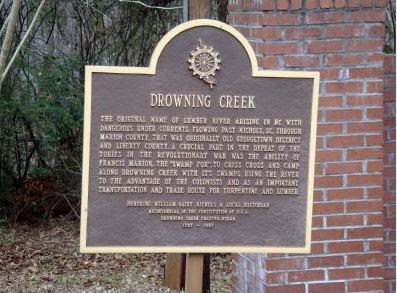
The Families - Drowning Creek


The Families - Drowning Creek 


This is how we got here; 


    How could anyone argue the Native Americans did not have Spanish, Portuguese, Italian and African DNA in 1608? Who were the Cofitachequi and where did they go?  

    Governor Dobbs of North Carolina sent the Militia out in 1754 to survey the Indians.The Bladen militia submitted the following: “Col. Rutherford’s Regimt. of Foot in Bladen County 441, a Troop of horse 36... Drowning Creek on the Head of Little Peedee, 50 families, a mixt Crew, a lawless People, filleth the Lands without patent or paying quit rents. Shot a surveyor for coming to view vacant lands being inclosed in great swamps. Quakers to attend musters or pay as in the Northern Counties. Fines not high enough to oblige the militia to attend musters. No arms stores or Indians in the county.” [Colonial Records of North Carolina, Vol. V, p161 

"Mixt" surely meant brown people, no Indians, after two hundred years these 'mixt Indians" had been living as their European/African/Indian ancestors,  they had shoelaces, buttons, etc., unlike the 'Indians.'

--------------------------------------------

Origins of Lumbee No Mystery 
S. Pony Hill Here

The founding families of Robeson mixed-bloods arrived in the Drowning Creek area during the era 1750 to 1770. Early land grants and wills can trace these individuals back to Bertie and Edgecombe Counties on the banks of the Roanoke River. Migration from the Tuscarora reservation was a well accepted fact among the historians of the area as recounted in newspapers and memoirs

The Ivey, Chavis, Locklear, Bass, Gibson, and Sweat families all owned land along the Roanoke River area of Edgecombe and Bertie in the 1720-30 era before moving down to Robeson, and it was there that they undoubtedly also intermarried with the reservation Indians.

The Sweat, Gibson and Bass families bore Indian blood prior to residing in Bertie County. Of Pamunkey Indian origin, the Sweats were prominent in that tribe’s affairs, as was the Bass family among the Nansemond. The Bass’s apparently picked up a Siouan bloodline after marriage into the Harris family in Bertie. (7) The Gibson’s were Siouan Indian inhabitants of the Tuscarora reservation, and also shared a common ancestry with the Chavis family. 

-----------------------------------------------


The Drowning Creek  


27 August 1753, John Johnson Jr. entered 100 acres in Bladen County, North Carolina on the north side of Pugh's marsh whereon John Oxendine was then living. (Bladen County Land Entries #805). In 1759 , he and two of his sons, John and Benjamin, lived in the Drowning Creek area of Bladen County, North Carolina which is the upper part of the Lumbee River area.

Moses Bass was living near "the drains of Drowning Creek" on 1 February 1754 when Robert Carver entered 100 acres there [Philbeck, Bladen County Land Entries, nos. 677, 934

Robert Sweat was granted 100 acres on Wilkerson Swamp near the Little Pee Dee River on 23 Dec 1754. This land adjoined the land of Joshua Perkins and was sold to Phillip Chavis.  

(Gilbert Sweat Case…21 Aug. 1829…St. Landry’s Parish LA… Testimony of Joshua Perkins – Gilbert Sweat was born about 1756 in what was then Marion Co. SC on the Pee Dee River. About the year 1777, Perkins helped Sweat run away with Frances Smith, the wife of J.B. Taylor. Sweat moved from SC to Tenn, to NC to Big Black River, Miss. And arrived in LA in 1804.)

31 Mar 1753 Grant: To Daniel Willis, 300 acres in Bladen County on Saddletree Swamp adjacent Thomas Ivey [Colony of NC 1735-1764 Abstracts of Land Patents, Margaret M. Hofman, Vol. 1, p10, grant #111]

17 November 1753  Bladen County land which had been surveyed for Gideon Gibson in North Carolina on the north side of the Little Pee Dee River was mentioned in a Bladen County land entry [Philbeck, Land Entries: Bladen County, no. 904]. 


20 Feb 1754 Land Entry: Thomas Ivey enters 150 acres including his own improvements, on the 5 Mile Branch in Bladen County. [North Carolina Land Entries 1753-1756, A. B. Pruitt, Vol. 2, p127] (From BOB'S FILING CABINET) 

1735 Spencer Bolton, born on the Pee Dee River.

  ....................................................................

1874 Hamilton County, Tennessee Court Case, Jemima Bolton, daughter of Solomon Bolton, granddaughter of Spencer Bolton. 

Judge Lewis Shepherd 

South Carolina had a law taxing free Negroes so much per capita, and a determined effort was made to collect this of them.  But it was shown in evidence on the trial of this case that they always successfully resisted the payment of this tax, as they proved that they were not Negroes.  Because of their treatment, they left South Carolina at an early day and wandered across the mountains to Hancock county, East Tennessee; in fact, the majority of the people of that country are “Melungeons,:” or allied to them in some way.  A few families of them drifted away from Hancock into the other counties of east Tennessee and now and then into the mountainous section of Middle Tennessee.  Some of them live in White, some in Grundy and some in Franklin county.  They seem to prefer living in a rough, mountainous and sparsely settled country.


-----------------------------------------------

In the early 1760’s Indians, as families, began to move out of the Granville County area. Many went south into the region of Cumberland County, North Carolina around Fayetteville and then into present day Robeson County. (These were simply the first Indian settlers in Robeson County. They were later joined by the Hatteras from the coast and Cheraw from South Carolina. Robeson County became a refuge for “loose” Indians and Indian families from all over that region congregated there over the years.) Theses Granville County families who went south into Robeson County were the Chavis’, Locklears, Gibsons, Collins’, Goings’, etc. These are families that we are sure came from the area of Granville County, North Carolina. Some of these families may have been composed of a black or white man with an Indian wife, although there is fairly good evidence that Collins is a Saponi family name. The Gibsons moved on further south from Robeson County so that name is no longer found in Robeson County among the Indians there who are officially now called the Lumbees.


Tuesday, May 16, 2023

The Great Pee Dee


The Pee Dee  Uwharrie & Yadkin 

The Lumber River, is a 133-mile-long  river in south-central North Carolina in the flat Coastal Plain. European settlers first called the river Drowning Creek, which is still used as the name of its headwater. The waterway known as the Lumber River extends downstream from the Scotland County-Hoke County border to the North Carolina-South Carolina border. 

Soon after crossing into South Carolina, the Lumber River flows into the Little Pee Dee River, which flows into the Pee Dee River, or Great Pee Dee River. Finally, the combined waters flow into Winyah Bay and the Atlantic Ocean.

The last three posts The Portuguese Spanish Italians & Africans  - Cofitachequi & DeSoto -  Pardo and Cofitachequi shows how first Lucas de Ayllon comes up the Winyah Bay in 1527 with 600-700 men, women, children and slaves, between 450 and 550 left unaccounted for.  Hernando de Soto follows this route in 1540 up the Pee Dee where he met the 'Lady of Cofitachequi' who allowed de Soto and his expedition to view her temple.  Here they found a knife, glass beads, rosaries, and Biscayan axes where they agreed it was part of de Ayllon's expedition. A few decades later we find Juan Pardo meeting the 'Lady of Cofitachequi' on the Pee Dee River, by this time four decades had past.

Four decades, two generations of the Native women carrying children of the Portuguese, Spanish, Genoan and African children with their European and African DNA. 

--------------------------------------

Fifteen years after the Stono Rebellion 

Stono rebellion, large slave uprising on September 9, 1739, near the Stono River, 20 miles (30 km) southwest of Charleston, South Carolina. Slaves gathered, raided a firearms shop, and headed south, killing more than 20 white people as they went. Other slaves joined the rebellion until the group reached about 60 members. The white community set out in armed pursuit, and by dusk half the slaves were dead and half had escaped; most were eventually captured and executed. 


Fifteen years later, 1754 
Governor Dobbs requested reports from the militia commanders of North Carolina’s counties. The Bladen militia submitted the following: “Col. Rutherford’s Regimt. of Foot in Bladen County 441, a Troop of horse 36... Drowning Creek on the Head of Little Peedee, 50 families, a mixt Crew, a lawless People, filleth the Lands without patent or paying quit rents. Shot a surveyor for coming to view vacant lands being inclosed in great swamps. Quakers to attend musters or pay as in the Northern Counties. Fines not high enough to oblige the militia to attend musters. No arms stores or Indians in the county.” [Colonial Records of North Carolina, Vol. V, p161]  Would the Governor have allowed 50 mixt families - African and White - who shot a surveyor to have lived free on Drowning Creek? 

-----------------------------------------

The Robesonian - Jul 13, 1933

Washington, July 11, .. (AP)

The Romantic theory that Sir Raleigh's "Lost Colony" lives on in the "Croatans" of Robeson county, N.C., today received a shattering blow from science. Dr. John R. Swanton, ethnologist of Smithsonian Institution, announced the tentative tracing of the identity of the "Croatan to the Siquan stock of Indians, best known in the northwest. By a study of early documents, tribal connections, and language, Swanton connected them closely with the Cheraw, a Siouan people first encountered in South Carolina by DeSoto in 1540.  And thus the cryptic word "Croatan," found carved upon a tree on Roanoke Island in 1590 as the sole trace of the "lost colony" means nothing in their lives. It was conferred upon them by Hamilton McMillan of Fayetteville, N.C., (he was of Red Springs, Robeson county), in support of his hypothesis they were descendants of the lost colonists.

There is no reason to believe that they have any connection with the lost Virginia colony established by Sir Walter Raleigh," the Smithsonian statement said. "Croatan was the name of an island, and an Algonquin Indian town just north of Hatteras, to which the survivors of the Raleigh colony are supposed to have gone. "But, assuming that the colonists did remove to Croatan, there is not a bit of reason to suppose that either they or the Croatan Indians ever went farther inland." Dr. Swanton started on his quest of the actual origin of a racial group, which now number about 8,000 persons of mixed Indians and white blood at the request of a delegation of the Indians themselves.

A colonial census in 1754 was found which told of a lawless people living at the headwater of the Little Peedee who had possesed themselves of land without patent and without paying any quit rents. 

Earliest Tribal Records

 "They presumably were recognized as whites at that time, but there is little doubt that they really were the ancestors of the present day Croatans," was the statement of the findings.  Actually, Dr. Swanton held, the predominant element in the blood of this lost people may have been the Keyauwee tribe of Siouans rather than the Cheraw, but he held the latter name could most appropriately be preserved as being the better known and more agressive branch of the family.  The misnamed "Croatans," Dr. Swanton pointed out were only one of many "lost races" scattered in population island through the east and especially in the south -- all predominately of Indian origin, but with strong admixtures of other racial stocks.

But the "Croatans" are found now -- they're Cheraws.

----------------------------------------------------------

The Keyauwee Tribe

John Lawson - 1701
Two features connected with the Keyauwee made a great impression on Lawson: the majesty and hospitality of the one Indian Princess and the whiskers of the men! He wrote: “The Queen had a Daughter by a former husband, who was the beautifulest Indian I ever saw, and had an Air of Majesty with her quite contrary to the general Carriage of the Indians. She was very kind to the English during our Abode, as well as her Father and Mother.” About the fashion among Keyauwee men he added: “Most of these Indians Wear Mustachoes and Whiskers, which is rare; by reason the Indians are a People that commonly pull the Hair of their faces and other Parts, up by the Roots and suffer none to grow.” The Keyauwee were the only American Indians ever known to let hair grow on their faces.  (The Saura and Keyauwee in the Land that Became Guilford, Randolph, and Rockingham, by Ethel Stephens Arnett;)

            (Champ Gibson Rockingham County Indians - David and Gilbert Jr. Randolph Co - home             of the Keyauwee Tribe -  Guilford County [from Orange] Joel Gibson, George Gibson)

----------------------------------------------------------

63D CONGRESS 3d Session 
SENATE DOCUMENT No. 677
INDIANS OF NORTH CAROLINA
Exhibit 87

The Croatan Tribe lives principally in Robeson County, N. C., though there are quite a number of them settled in counties adjoining in North and South Carolina. In Sumter County, S. C., there is a branch of the tribe and also in East Tennessee. In Lincoln County, N. C., there is another branch, settled there long ago. Those living in East Tennessee are called "Melungeans," a name also retained  by them here.

---------------------------------


Melungeons came from the Pee Dee River where where some 600-900 soldiers, European and African mixt with the Indian

----------------------------------------

Lawrence C. Johnson was born 1821 in Chesterfield County South Carolina, his grandfather served in the Revolution from South Carolina. This seventy year old man read the article by Swan Burnett about the Melungeons of Hancock County, he knew the name and knew from where they came. 

Atlanta Constitution
March 11, 1889  The Melungeons

Meridian, Miss.,
March 11– Editors Constitution

Near a month ago an article appeared in The CONSTITUTION named Melungeons. I laid it aside in order to correspond with the writer, but the paper got destroyed and the name and address had not been noticed with care, and are forgotten. Excuse me then for addressing him through the same medium.

His name Melungeons is a local designation for this small peculiar race. Their own claim to be Portuguese is more generally known. Their original site is on the Pedee river in South and North Carolina . They were once especially strong in Georgetown and Darlington districts of the latter.


A Note on the Melungeons  Swan Burnett 1889

---------------------------------------------------------------------------

Part I  The Portuguese Spanish Italians & Africans


Part III  Pardo and the Cofitachequi

Part IV  The Great Pee Dee 

Part V  The Families  

Tuesday, May 9, 2023

Pardo & the Cofitachequi


Juan Pardo

By the time Pardo came up the Pee Dee in 1568 the Cofitachequi and other tribes had been mixing with the Spanish, Portuguese and Africans that had come before him, for forty years.  Two generations of Mixed Native Americans with European and African DNA. 


As you can see from previous blog Juan Pardo pretty much followed the same path of de Soto, visting some of the same towns, in particular the Cofitachequi, Ylasi, etc.,and mixing with the Native Women of the same tribes as de Soto and de Ayllon. Over a thousand men just in those three expeditions leaving European and African DNA in Natives from South Carolina to Alabama.


 Hiking Through History- National Park Service

Bates Ferry Trail follows a historic road that dates back to when South Carolina was a British colony. Like other roads, it is possible that this path predates European settlement. 

In 1540, the Spanish explorer Hernando de Soto passed through here on his way to Cofitachequi, the seat of power for a regional chiefdom. Later explorers, including Juan Pardo and John Lawson left important accounts of the landscape and the cultures that lived in the area. 

The Lady of Cofitachequi offered to allow de Soto and his soldiers to inspect the contents of her temples that contained many pearls and other objects of interest, in the temple of Cofitachequi, De Soto found more than 200 pounds of pearls and an abundance of deerskins. He also found a variety of European items including a knife or dirk, glass beads, rosaries, and Biscayan axes. All members of the expedition agreed that these materials must have originated from Ayllon's 1526 expedition  (Elvas 1904: 66-67; Biedma 1904: 14; Ranjel 1904: 101

 
Pardo visited the Cofitachequi and Henry Woodward was the last to have contact with them in 1672, by 1683 the Cofitachequi had disappeared,. Had they became the Saura/Cheraw, the Catawba? In 1775 Dragging Canoe of the Cherokee said; ""Whole Indian Nations have melted away like snowballs in the sun before the white man's advance. They leave scarcely a name of our people except those wrongly recorded by their destroyers."  

Last mention of record of the Cofitachequi in 1681 was John Lawson while exploring the Wateree/Catawba Valley in 1701 and found a 'group of people' called the Congaree living on the land where last seen was the Cofitachequi.

It is noteworthy that on the earliest English maps of the Carolinas, the Pee Dee-Yadkin River is called the "Watere River," as for example, on the Joel Gascoyne map of 1682. HERE 

It would appear the Cofitachequi town, at leastone of them,  was on the Pee Dee. 

On January 7, 1568 Pardo departed Guatari, heading for Aracuchi.  The force traveled for five days making the five leagues per day, thus covering twenty-five leagues in all.  At Aracuchi Pardo decided to split his party up, sending one group on south to Cofitachequi, while the other group on south to Cofitachequi, while he would take the other group towards the east to Ylasi.  

In five days they made twenty leagues thus placing Ylasi somewhere in the vicinity of *Cheraw, South Carolina.

Page 155 

Society, Florida Historical (1983) "Florida Historical Quarterly, Volume 62, Number 2," Florida Historical  Quarterly: Vol. 62 : No. 2 , Article 1.  Page 155 

"The [Congarees] are kind and affable to the English ... [Although] their Tribes and Nations border one upon the other, yet you may discern as great an Alterartion in their Features and Dispostitions, as you can in their Speech, which generally proves quite different from each other, though their Nations are not above 10 or 20 miles in Distance." - John Lawson -----------------------------------------------------------------------------------------------------------

JOARA

Joara the largest Mississippian-culture settlement within the current boundaries of North Carolina, just north of Morganton was established about AD 1000.  In 1540 the party of Hernando De Soto recorded encountering the people at this chiefdom site. De Soto's 1540 expedition also noted the Chalaque people in the area near Joara.

JOARA AND FORT SAN JUAN: COLONIALISM AND HOUSEHOLD PRACTICE AT THE BERRY SITE, NORTH CAROLINA [Tulane University]

Over most of the eighteen months that Spanish soldiers lived at Joara, amicable relations existed between the people of this town and their European guests--on at least two occasions, for example, the Spaniards accompanied native warriors in attacks on hostile native chiefs across the Appalachians in Tennessee and Virginia (Beck 1997a). Also, when Pardo was preparing to leave the fort during his second expedition, he commanded its ensign, Alberto Escudero de Villamar, to ―judge and have a care of the conservation of the friendship of the caciques and Indians of all the land‖ (Bandera I 1990:278). In the months after Pardo‘s departure in November 1567, however, relations between Fort San Juan and the people of Joara took a calamitous turn for the worse. By May 1568, news reached Santa Elena that Indians had attacked all of Pardo's forts, including Fort San Juan, and that all were destroyed (Hudson 1990:176). Several factors may have played a role in this aggressive action, but two stand out: the soldiers' demands for food and their improprieties with native women. At Fort Santiago, for example, Pardo ordered ―that no one should dare bring any woman into the fort at night...under pain of being severely punished (Bandera I 1990:285).   https://www2.tulane.edu/~crodning/nsfreport2010.pdf

Available HERE


South Carolina Encyclopedia HERE

*Cheraw is located at the head of navigation of the Great Pee Dee River. Before the arrival of European settlers, the Cheraw Indians maintained a village near the site. Decimated by smallpox in the 1730s, the Cheraws abandoned the region, leaving only their name at the small trading village. 

 According to these arguments, the people of the Cofitachiqui spoke either a Muskhogean or a Siouan language. If they spoke Muskhogean, they were likely related to the Creek Indians of Georgia and Alabama, and they probably migrated westward in the late seventeenth century. If, however, they spoke a Siouan language, then the Catawba and related tribes are probably descendants of the chiefdom.


Over a thousand men just in those three expeditions 
leaving European and African DNA with the
Natives from South Carolina to Alabama.

How come no one tells you that?  Not the DNA Study. Not the MHA.  Not the countless articles and books they put out.  


Thursday, May 4, 2023

Cofitachequi & DeSoto

 
DeSoto meets the Lady of Cofitachequi


Following Hernando deSoto and his crew of Portuguese, Spanish, Genoans and Slaves and starting at the orange spot on the right the COFITACHEQUI  was one of the first Carolina Tribes they came in contact with.  The next town in the orange still is Ilasi [see below] which Charles Hudson says is the same as Juan Pardo's Ylapi in 1570.

Leaving Ilasi it appears the next Carolina Tribe would be the Cherokee, keep in mind they are taking the Native women from the towns they visit.  Next they borrowed some Native women from Joara. 


"Joara was a large Native American settlement, a regional chiefdom of the Mississippian culture, located in what is now Burke County, North Carolina about 300 miles from the Atlantic coast in the foothills of the Blue Ridge Mountains.[1] Joara is notable as a significant archaeological and historic site, where Mississippian culture-era and European artifacts have been found, in addition to an earthwork platform mound and remains of a 16th-century Spanish fort." Wikipedia

"The first European encounters came in the mid-16th century. In 1540 the party of Spanish conquistador Hernando De Soto recorded visiting this place.[2] A later expedition in 1567 under Juan Pardo, another Spanish explorer, founded the first European settlement in the interior of the continent, establishing Fort San Juan at this site, followed by other forts to the west.[

Members of Hernando DeSoto’s expedition became the first recorded Europeans to encounter the Mississippian culture people, in the towns of Chalaque, Guaqili, Xuala (Joara), and Guasili.[1] Joara was a regional chiefdom established around the year 1000 near the present day town of Morganton, North Carolina.[2] These villages are believed to have been developed by Catawba ancestors (specifically the Cheraw).

Next to towns he visited would be Chisca and Chiaha in East Tennesee, Southwest Virginia and Southern Kentucky.  The Chisca were brothers to the Choctaw. 

Before the tribes of Chickasaw and Choctaw were two different tribes, they were one entity. The tribe was split into two groups, each with their own leader. Chiksa' and Chahta were brothers and led the two groups.   HERE

---------------------------------------------------------------------------------------------------------------------- 


Ylasi on the Pee Dee River

 ---------------------------------------------------------------------------------------------------------------------

This is just one leg of the journey of these explorers with their European and African DNA mixing with the Native Women. 

They mixed with the Tribes in Georgia, Mississippi, and Alabama.  Documented, a three year journey across the Southwest.  How many descendants did they leave?  How many of deAyllon's men's descendants?  How many of Juan Pardo's mens in 1670 left descendants with the Native Women?  

It's called Pre-Contact.  Roberta Estes, Jack Goins, Penny Ferguson and Janet Crain were all well aware of these Spanish, Portuguese, and Africans and their DNA before they wrote that 2012 paper when they wrote the Melungeons there was 'no evidence of Native American DNA.  

Robert Estes:  

Scientists know today that there are only two primary haplogroups indicating deep ancestry that are found among Native American males who were here prior to contact with Indo-Europeans, and those haplogroups are C and Q3. It is not accurate to say that all C and Q3 individuals exist only in the American Native population, but the American Native population is part of the larger group worldwide that comprises C and Q3. We find little to no C or Q3 in European or African populations, although we do learn more every single day in this infant science.

This sometimes becomes confusing, because the single most common male haplogroup among current Cherokee tribal members who have tested is R1b. How can this be, you ask?
Clearly, one of three possibilities exists:
1. The Cherokee (or those tribes who were assimilated into the Cherokee) adopted a European male into the tribe or a European male fathered a child that was subsequently raised as Cherokee.
2. The R1b ancestor was not adopted into the tribe, maintained their European/American identity but married a Cherokee individual. This might be the case where one of the 8 great-grandparents in our example was white, and the other 7 were not.
3. There is some level of R1b admixture in the Native Population that preceded contact with Europeans that we have not yet identified. 
Proving Your Native American Heritage  2007

Ms Estes was a member of the Rootsweb Melungeon List when I posted this information, she asked me for a source, I sent her the linke to the DESOTO JOURNALS Published in 1587.  Goins, Ferguson, and Crain were all members of this list as well as private email chain I was involved in, they were all aware of PRE-CONTACT.  

The Lady and The Slave

As they were on their journey, the Lady of Cofitachiqui "left the road, with the excuse of going in the thicket, where, deceiving them, she so concealed herself that for all their search she could not be found." De Soto, frustrated in his quest to find her, moved on to Guaxule (Jameson, 1907, p. 176).

Alimamos, a horseman of de Soto who "got lost," somehow wandered upon the refugee slaves. He "labored with the slaves to make leave of their evil designs" but only two of the refugees returned to de Soto. When Alimamos arrived back at the camp with the refugees who had decided to return, "the Governor wished to hang them" (Jameson, p. 177). [paragraph 6]However, the horseman also made another report. He stated that "The Cacica remained in Xualla, with a slave of Andre de Vasconcelas,(the Portuguese jp) who would not come with him (Alimamos), and that it was very sure that they lived together as man and wife, and were to go together to Cutafichiqui" (Jameson, p. 177).            THE DESOTO JOURNALS  1587


 List of sites and peoples visited by the Hernando de Soto Expedition  HERE


 To Be Continued

Next Up Juan Pardo


Wednesday, May 3, 2023

The Portuguese Spanish Italians & Africans


Imagine if you will 600 Portuguese, Spanish, Genoans and Slaves
taking Native Women from each town they made a foray in for deSoto
and his planned settlement at Mobile. From the Carolinas, Tennesee,
Kentucky, Georgia, Mississippi and Alabama. How many Native
children were born to those Native Women from 1527 deAyllon,
1540 deSoto, and Pardo 1570. All with African and European DNA.

Enlarged Map   Here 


In May 1539,  Hernando de Soto left Havana, Cuba, with *nine ships, over *620 men and 220 surviving horses and landed at Charlotte Harbor, Florida. This began his three-year odyssey through the Southeastern North American continent, from which de Soto and a large portion of his men would not return.


In his travels Pardo took a side trip to Ylasi, which appears
to have been the same as the Ilapi of the De Soto expedition''
Charles Hudson - 'Forgotten Centuries""


"In the month of April, of the year 1538, the adelantado (deSoto) delivered the ships over to the captains who were to go in them. He took a new and good sailing ship for himself and gave one to Andre de Vasconcelos, in which the Portuguese went"  

At the time of his departure, because of the importunity of some who wished more than was proper, he asked the cacique for thirty Indian women as slaves.....The Indians gave the governor thirty Indian women and the necessary tamemes [for DeSoto's men to wed then populate his planned settlement at Mobile Bay].

They captured a hundred head, among Indian men and women. Of the latter, there, as well as in any other part where forays were made, the captain selected one or two for the governor and the others were divided among themselves and those who went with them.

At the time of his departure, because of the importunity of some who wished more than was proper, he asked the cacique for thirty Indian women as slaves.....The Indians gave the governor thirty Indian women and the necessary tamemes [for DeSoto's men to wed then populate his planned settlement at Mobile Bay].


On the third day, the Queen disappeared; de Soto sent his guards to find her but she was not to be found (Bourne, 1904, p. 110). Taking advantage of her absence, he entered one of the ancient temple mounds that were scattered about the town of Talemico, the religious and political center of the people of Cofitachiqui. The temple mound was one hundred feet long and forty feet wide with massive doors. As he entered through the doors, he encountered paired rows of massive wooden statues with diamond-shaped heads bearing first batons, then broadswords, and then bows and arrows (Hudson, 1976, p. 111).

Like the ancient pyramids of Egypt, these temple mounds contained statues of notable persons of antiquity and chests filled with the remains of the elders. Scattered about the temples were bundles of fur, breastplates, and weapons -- tools for the next life -- covered with pearls, colored leather, and "something green like an emerald" (Bourne, p. 100). [paragraph 3]De Soto and his men plundered the ancient temple. Among the booty were items of a European make, "Biscayan axes or iron and rosaries with their crosses" (Bourne, 1904, p. 100).

De Soto and his men determined that these materials were the remnants of an earlier expedition led by Lucas Vazquez de Ayllon. He and his men had settled on the coast of the Carolinas near on the Peedee River in 1526. African slaves were members of Ayllon's colony; when there was a crisis over leadership, the colony fell into disarray. In this crisis, there was a slave revolt**. When the colony crumbled, many of the African slaves fled to live among the nearby Native Americans (Wright, 1902, pp. 217-228).

As they were on their journey, the Lady of Cofitachiqui "left the road, with the excuse of going in the thicket, where, deceiving them, she so concealed herself that for all their search she could not be found." De Soto, frustrated in his quest to find her, moved on to Guaxule (Jameson, 1907, p. 176).

Alimamos, a horseman of de Soto who "got lost," somehow wandered upon the refugee slaves. He "labored with the slaves to make leave of their evil designs" but only two of the refugees returned to de Soto. When Alimamos arrived back at the camp with the refugees who had decided to return, "the Governor wished to hang them" (Jameson, p. 177). [paragraph 6]However, the horseman also made another report. He stated that "The Cacica remained in Xualla, with a slave of Andre de Vasconcelas,(the Portuguese jp) who would not come with him (Alimamos), and that it was very sure that they lived together as man and wife, and were to go together to Cutafichiqui" (Jameson, p. 177).

**Lucas Vazques de Ayllon expendition consisted of 600-700 men, women and children including 100 enslaved Africans 1527 on Winyah Bay, South Carolina.  Of these only 150 returned, leaving behind 450-550 men, women, children and slaves. 

To Be Continued 

Historical Articles - Wayback Machine

  T hese are excerpts from old newspapers and magazines.  Click on the link at the end of the paragraph to read the entire article. Gen. Com...